


Would you like to have your watchlist on all your devices? Log in or register for free.
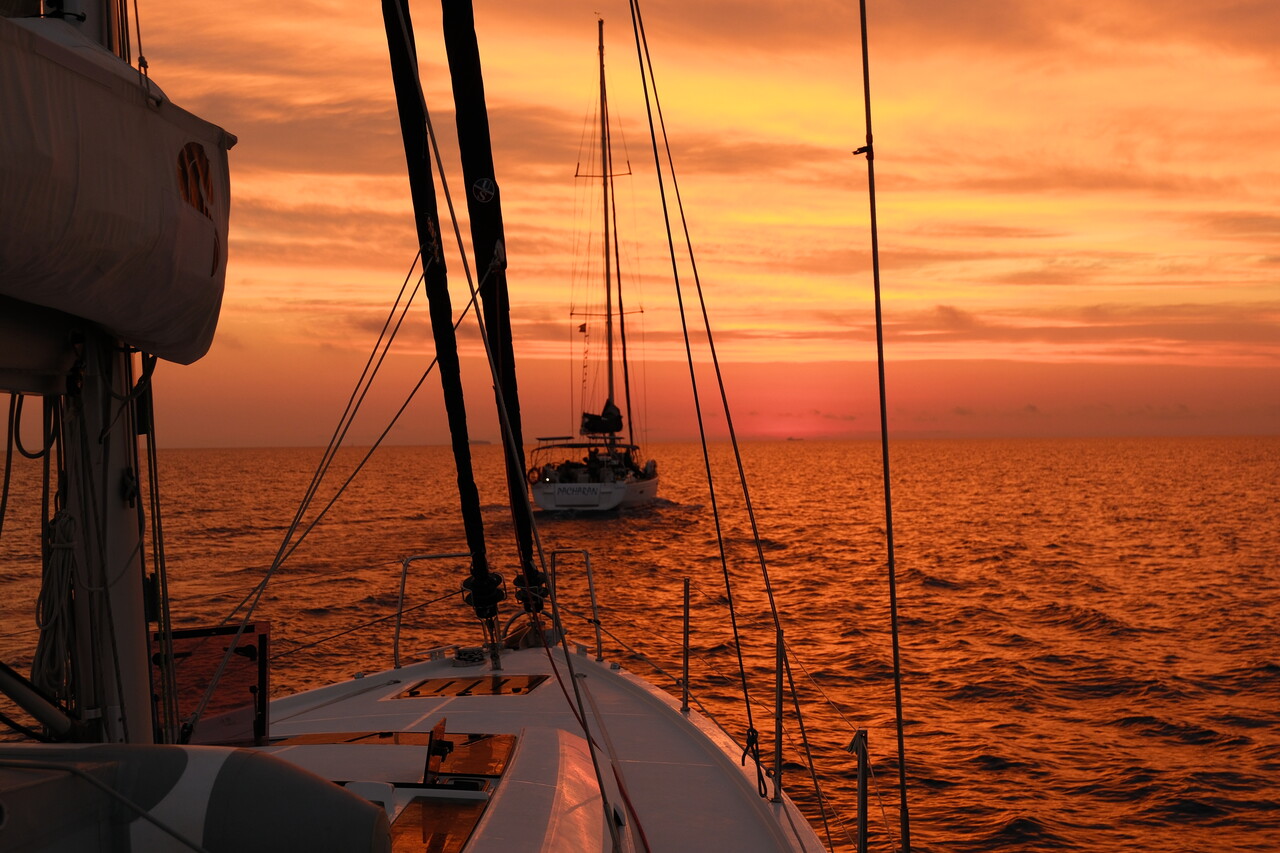
Yacht charters in Ibiza and Mallorca

The Balearic Islands are an attractive charter destination, but in some respects require a different approach to planning a sailing trip than, for example, Croatia or Greece. Particularly around Ibiza and Formentera, Posidonia conservation measures, buoy fields requiring reservation, crowded bays and heavy boat traffic play a major role. Added to this, in the height of summer, there is the heat and weather conditions that you should keep an eye on, even if conditions appear calm at first. If you are aware of these particular factors before chartering, you can save yourself a fair bit of stress during your trip.
When mooring, Posidonia is off limits
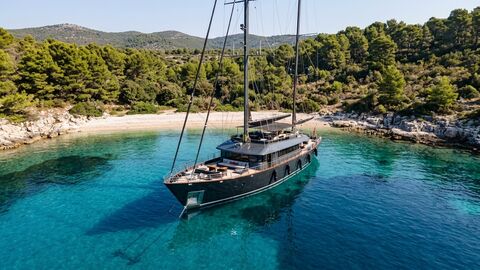
One of the most important points to bear in mind in the Balearic Islands concerns anchoring. The large Posidonia seagrass beds are under special protection and must not be damaged by anchors or chains. For the skipper, this means checking carefully what lies beneath the boat before dropping anchor.
In many bays, sandy areas alternate with seagrass beds. A clear spot on the chart therefore by no means means that you should simply drop anchor. The official Balearic Islands Posidonia charts are helpful. In good light, the seabed can often be made out from the bow as well.
These checks should be taken seriously. During the season, numerous patrol boats are out and about in the Balearic Islands, specifically monitoring the protection of Posidonia. Around Ibiza and Formentera, we have seen for ourselves that they sometimes scrutinise the area very closely. Anchoring incorrectly can therefore prove costly.
Ideally, checking the seabed should be just as much a matter of course during the anchoring manoeuvre as checking the water depth, the turning circle and the weather.
Mooring lines alter your plans in small bays
Another particularity concerns shore lines. Anyone who sails frequently in Croatia will be familiar with the classic manoeuvre: drop the anchor first, then cast one or two lines from the stern to the shore, and the boat sits securely in the cove.
In the Balearic Islands, you shouldn’t count on being able to do this. In practice, this mainly means you have fewer options for positioning the yacht specifically in line with the swell.
This can become problematic when the wind and swell are coming from different directions. The boat orcs itself according to the forces acting on it whilst at anchor and may therefore end up lying across the swell. This can quickly become uncomfortable, particularly on monohulls.
From my own experience, an additional stern anchor can be a solution in suitable situations. Of course, you must take into account sufficient space, the position of neighbouring boats, possible wind shifts and the seabed. Under no circumstances should a second anchor be placed in a Posidonia bed.
Book S’Espalmador and Es Caló de s’Oli well in advance
Some of the most beautiful mooring spots around Ibiza and Formentera are equipped with regulated buoy fields. These include, amongst others, S’Espalmador and Es Caló de s’Oli.
I would definitely recommend both for a Balearic Islands sailing trip. At the same time, you should sort this out as early as possible during the peak season. In our experience, it’s a good idea to allow about two weeks’ notice if you want to include a specific day firmly in your itinerary. The sooner your sailing plans are finalised, the better.
Bookings are made via the PortsIB system. For charter yachts, you’ll need a ‘Boat Code’, which you can obtain from the charter company or the charter base.
Despite having made a booking, your itinerary should, of course, remain flexible.
There is a lot of traffic on the water around Ibiza
Anyone who is mainly familiar with Ibiza and Formentera from land can easily underestimate just how busy it gets on the water during the season. Ferries between the islands, excursion boats, water taxis, tenders from large yachts, day charters and private motorboats can all contribute to quite a lot of traffic at times.
This is particularly noticeable in popular bays. As well as avoiding collisions, the swell plays a role here. A seemingly calm anchorage can become significantly rougher during the day due to passing boats.
When swimming or out in a dinghy, you should also keep an eye on the traffic. Extra caution is particularly advisable on busy routes between Ibiza and Formentera.
Thunderstorms can quickly change conditions
During the Balearic summer, there are many days with calm, predictable weather. Nevertheless, you should regularly check the forecast whilst out on a trip.
Thunderstorm conditions deserve particular attention. They can bring strong localised gusts and, within a relatively short time, turn what was initially an uneventful day into an unpleasant situation. A light breeze in the morning is therefore no reason to stop checking the weather for the rest of the day.
When planning your trip, in addition to the usual weather apps, it’s worth checking the official maritime forecasts and warnings from AEMET. If thunderstorms are forecast, I’d prefer to spend the night in a really well-sheltered spot and opt for mooring buoys.
In the height of summer, air conditioning is worth its weight in gold
July and August can get very hot in Ibiza, Formentera and Mallorca. In Ibiza, average daily maximum temperatures at this time of year are around 30 degrees, and even at night it remains on average over 20 degrees.
On board, this can quickly feel much more uncomfortable when there is little wind. In the cabins in particular, the air can sometimes feel downright stuffy at night.
Anyone chartering in the height of summer who has some flexibility when choosing a yacht should therefore definitely consider air conditioning as a selection criterion. On a catamaran or a larger yacht with a generator and a powerful air-conditioning system, this makes a huge difference after a hot day.
Charter in Mallorca or directly in Ibiza?
When looking for a charter yacht, it’s also worth comparing options with Mallorca. There’s a wide range of yachts on offer there and, depending on the dates and the yacht, there may be some attractive alternatives to a base directly on Ibiza.
The extra distance involved should not be underestimated. Anyone who actually wants to explore Ibiza and Formentera must first sail from Mallorca across the open sea to the Pityusic Islands. Depending on the port of departure and destination, this can easily amount to 60 to 80 nautical miles or more each way.
On a one-week charter, this can take up a significant portion of the available time. If you sail during the day, you’ll spend much of the first and last sections of the trip on the crossing. A night-time crossing can free up more time to spend in Ibiza and Formentera, but requires an experienced crew, suitable conditions and a suitable boat.
Before booking, I would therefore not simply compare the charter price. The overall plan is crucial: how many days do you actually want to spend around Ibiza and Formentera, how fast is the boat, and how comfortable is the crew with a longer open-sea crossing?
If you’re mainly keen to explore Mallorca and perhaps add a visit to Ibiza, the situation is different. For a trip focused solely on Ibiza and Formentera, a base directly on Ibiza is usually much more relaxed.
Good preparation pays off in the Balearic Islands
The Balearic Islands offer plenty of freedom when planning a sailing trip, but there are a few things you should sort out before setting sail. In particular, I’d recommend booking your preferred mooring spots well in advance and having the Posidonia charts to hand before your first anchoring manoeuvre. You’ll also need to check the weather regularly and allow for the possibility of crowded bays and heavy traffic.
Anyone used to sailing in these waters from Croatia or Greece will need to adjust their approach, particularly when anchoring. Once you’ve got to grips with the peculiarities, Ibiza, Formentera and Mallorca offer a very varied sailing area for a week’s charter.