


Would you like to have your watchlist on all your devices? Log in or register for free.
Ocean Race Atlantic 2026

After nearly 3,200 nautical miles across the North Atlantic, the first edition of The Ocean Race Atlantic was only decided in the final few miles. From New York to Lorient, some of the world’s fastest IMOCA yachts battled it out in a race where, in the end, only a few minutes separated first place from fourth.
Four teams battling it out for victory
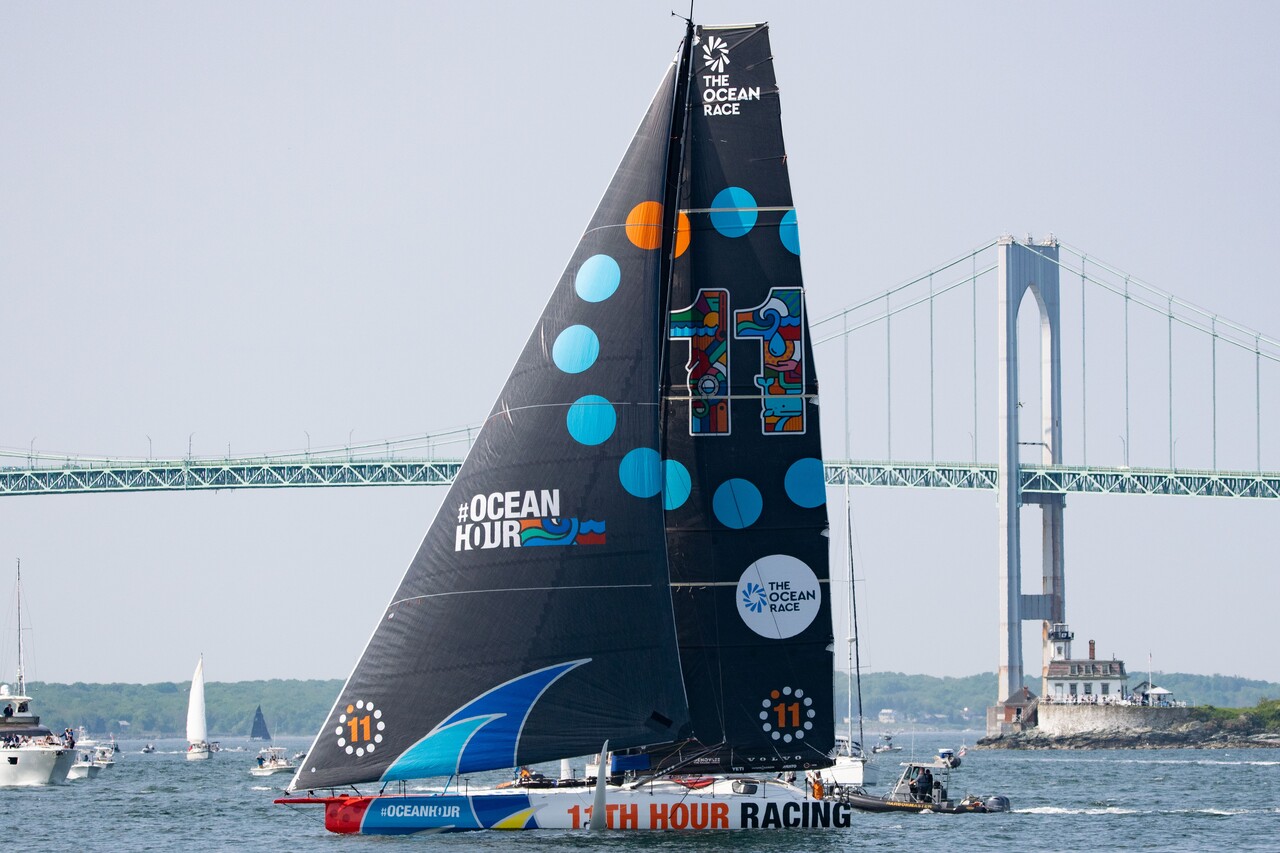
A leading group broke away early on, with United by the Ocean, 11th Hour Racing, DMG MORI Global One and Team Malizia repeatedly battling it out for the top positions. Strong winds, fast foiling legs and tactically challenging weather zones meant that no team was able to establish a decisive lead for any length of time. In the North Atlantic in particular, it became clear just how closely matched the performance levels of the modern IMOCA generation have become.
High speeds, high stress
The fast 60-foot yachts reached speeds of more than 20 knots over long stretches and, at times, significantly higher. This constantly pushed not only the crews but also the foils, rudders and rigs to their limits. Team Malizia felt this particularly keenly when the new Malizia 4 struck an unknown object with its port foil whilst travelling at high speed, damaging the adjustment system.
Despite being repaired at sea, the yacht remained in the race and fought its way back to the front of the field.
Suspense right up to the French coast
Even over the final hundred nautical miles, the race remained completely open. Light and shifty winds off Lorient caused the gaps to narrow time and again, making tactical decisions just as important as sheer boat speed. On the final morning, the leading teams were separated by just a few nautical miles.
Paul Meilhat wins the Ocean Race Atlantic
Victory ultimately went to Frenchman Paul Meilhat aboard United by the Ocean after 7 days, 23 hours, 39 minutes and 11 seconds. Just 8 minutes and 56 seconds later, Francesca Clapcich crossed the finish line with 11th Hour Racing to take second place. Kojiro Shiraishi and DMG MORI Global One held on to third place, whilst Boris Herrmann and Team Malizia crossed the line in fourth place, just around five minutes later. After almost eight days of offshore sailing, the top four yachts were exceptionally close together.
A taste of the next generation of IMOCAs
As well as the sporting result, the race also served as an important comparison of the latest IMOCA designs. Several teams relied on new or significantly upgraded yachts, whose foils, hull shapes and cockpit designs are engineered for maximum speed and efficiency. The Ocean Race Atlantic thus became not only a regatta, but also a gruelling test for the next generation of ocean racing.
A race with international appeal
With crews from France, the USA, Japan, Germany and other sailing nations, the race demonstrated just how international the IMOCA class has become. The extremely close finish also highlighted that the gaps between the top teams are narrowing, and that breakdowns, weather decisions or a matter of minutes can quickly determine several positions in the standings. The inaugural Ocean Race Atlantic thus delivered exactly what defines modern offshore racing: speed, technology, tactical uncertainty and suspense right up to the finish line. The message for the upcoming major IMOCA races is therefore clear: at the top, there is currently little room for error, and almost any team can decide the outcome of a race.


