


Would you like to have your watchlist on all your devices? Log in or register for free.
The Bosphorus vs. the World's Great Straits

The Bosphorus is not unusual because it separates Europe and Asia. Several straits do that. It is unusual because a major city sits directly on it, on both sides, for its full length. That makes a Bosphorus cruise different from cruising most other straits. The shoreline itself, not just the crossing, is the main attraction.
Straits are key waterways. They connect seas. They separate continents. Many are important for trade and history.
The Strait of Gibraltar, the Strait of Hormuz, the Strait of Malacca, the Strait of Dover, the Strait of Messina, the Bering Strait and the Dardanelles are well known examples. Each has its own geography and role in shipping.
The Bosphorus is different.
Most Straits Are Defined by Nature
Most major straits pass through natural or lightly developed land. The Bering Strait is remote and Arctic. The Strait of Gibraltar has dramatic cliffs and open water between Europe and Africa. The Strait of Messina offers coastal scenery between Sicily and mainland Italy. These straits are known mainly for geography, not for the cities around them.
The Bosphorus Runs Through a City
The Bosphorus is different. It runs directly through Istanbul, a city of about 16 million people.
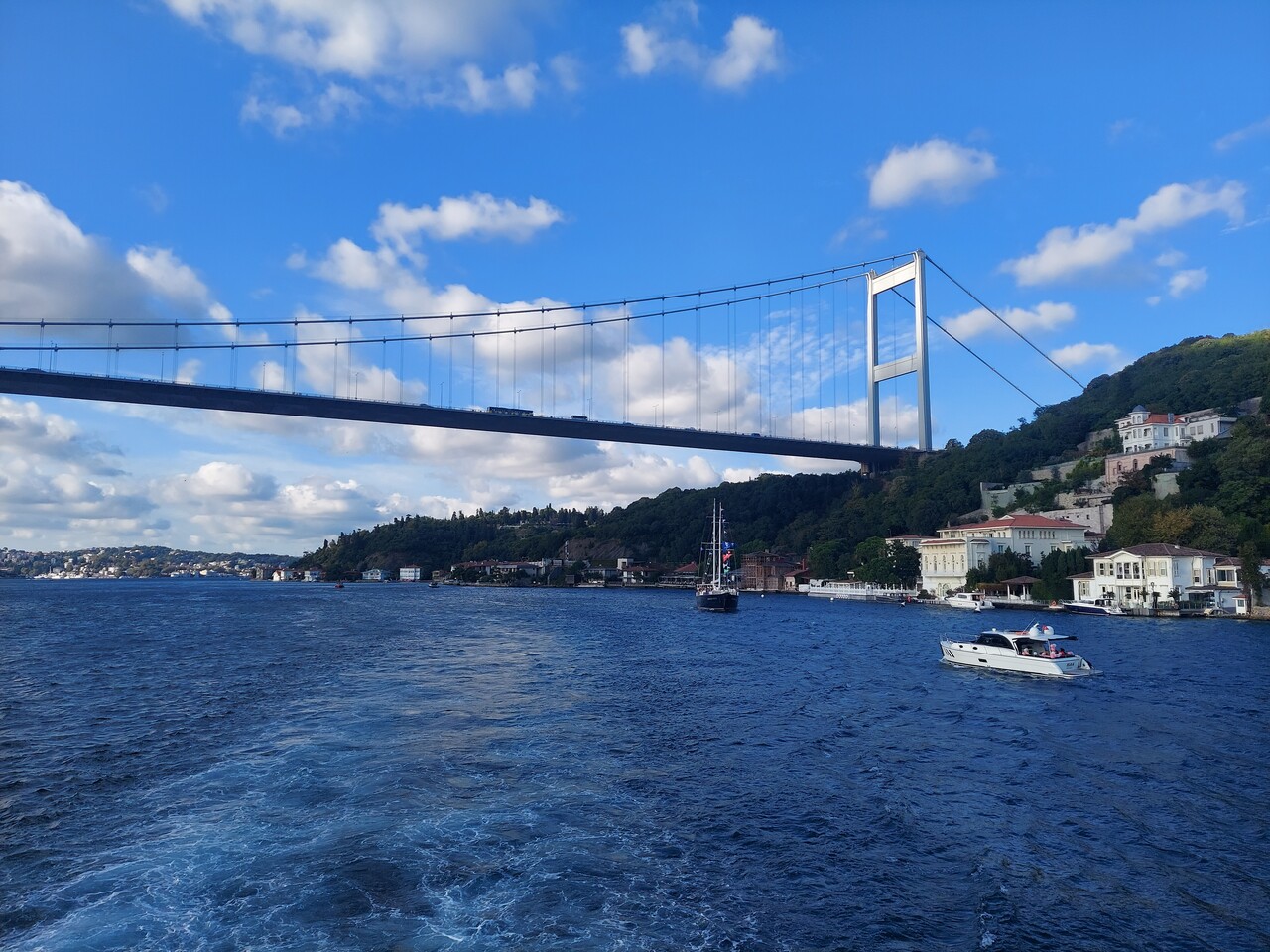
Both shores are visible for the entire length of the strait. Both are built up. Palaces, historic wooden mansions (yalıs), fortresses, mosques and residential neighborhoods sit along the water. Two bridges cross overhead. Ferries carry commuters across the same channel used by international shipping.
This is not just a passage between two seas. It is also a working part of daily life in Istanbul.

What This Means for a Boat Trip
On many straits, the main interest is the crossing itself. On the Bosphorus, the interest is what lies along the shore.
For example, crossing the Strait of Gibraltar is mainly about the crossing itself. The point is moving from Europe to Africa, with open water and coastline in view. Crossing the Bering Strait is similar. The interest is the distance, the cold water and the idea of two continents facing each other. There is very little built environment on either side. The Strait of Dover works the same way. Ships and ferries focus on getting across a busy shipping lane, not on the shoreline. In each of these cases, once the crossing is done, the experience is largely over.
A boat moving through the strait passes historic sites one after another. A palace. A fortress. A mosque. A modern bridge. A waterfront restaurant. This happens continuously, on both sides, for about 30 kilometers.
Other straits can be just as important for shipping or just as scenic. The difference is density. No other major strait combines two continents, heavy international shipping, and a large, historic city built directly along both banks.

Conclusion
The Bosphorus is not unusual because it separates Europe and Asia. Several straits do that. It is unusual because a major city sits directly on it, on both sides, for its full length. That makes a Bosphorus cruise different from cruising most other straits. The shoreline itself, not just the crossing, is the main attraction.