

Would you like to have your watchlist on all your devices? Log in or register for free.

The Myth of Red Mercury and the Mystery of Red Mercury Island

In recent years, “red mercury” has captured global attention, whispered about as a powerful and almost magical substance. People searching for red mercury often believe Red Mercury Island is connected to the myth, but in reality, it is not.
Rumors claim red mercury can be used in advanced technology, nuclear weapons, or as a secret elixir. Despite decades of speculation, no scientific evidence supports its existence. Experts consider it a hoax, yet the myth continues to fascinate. On the black market, red mercury has been advertised for hundreds of thousands of dollars per gram, fueling scams and expeditions.
Yet, the name Red Mercury also exists in the real world in the South Pacific Ocean—as Red Mercury Island, the easternmost of New Zealand’s Mercury Islands.
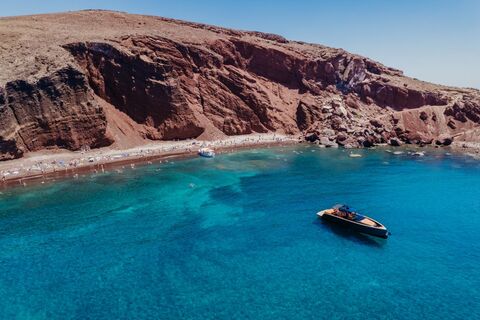
Known to the Māori as Whakau, the island earned its name from its reddish cliffs rising dramatically from the sea. Unlike the mythical substance, the island’s secrets are very real: it is a sanctuary for endangered species like Pycroft’s petrel and the Mercury Islands tusked wētā, highlighting nature’s true treasures.
Whether chasing legends or exploring remote wonders, Red Mercury Island reminds us that some treasures exist without myths, and some myths exist without evidence - but both capture our curiosity.
The main chain of the Mercury Islands consists of the large Great Mercury Island (also known as Ahuahu) to the west, Red Mercury Island (Whakau) to the east, and five much smaller islands between the two (Korapuki, Green, Atiu/Middle, Kawhitu/Stanley and Moturehu/Double Islands).
Although only 18 people live on the island, Ahuahu Great Mercury attracts thousands of visitors each year, from Coromandel weekenders to large cruising yachts.
Below you can see Great Mercury Island.